
AI company domain names have become one of the most contested assets in startup branding, with founders paying five and six figures for short .ai and .com strings that signal category authority on sight. This bidding pressure stems from investor due diligence, App Store and Google trust signals, and the simple reality that a credible domain now doubles as a pitch deck asset. The good news: with the right sourcing strategy, you can secure a premium-grade name without the inflated aftermarket price tag.
Every week, another AI startup announces a seed round, and within hours, someone on X points out they paid more for their domain than their first engineering hire’s salary. It sounds absurd until you look at the mechanics behind it. Naming has quietly become a competitive layer of the AI funding race, sitting right next to the pitch deck and the product demo.

For founders building in this space, understanding how AI company domain names get valued – and where the inefficiencies still exist – is now a genuine strategic advantage. If you’d rather skip the bidding wars entirely, Aolra’s curated marketplace of inexpensive premium domains gives you a shortcut to names that would otherwise cost a small fortune on the open aftermarket.
This guide breaks down exactly why AI company domain names are commanding such steep prices, what actually drives that value, and the practical playbook for buying premium-grade names without paying premium-crazy money.
Why AI Company Domain Names Are Suddenly So Expensive
The short answer: capital, scarcity, and trust all collided at once in the AI sector.
Venture funding into AI startups accelerated sharply through 2024 and 2025, and every new company needed a name and a URL on day one. That created a sudden demand spike for a category of domain names that was already thin on supply – short, brandable, dictionary-adjacent .ai and .com strings.

A few forces are compounding the price pressure:
Investor optics.
A clean domain reads as a company that has its act together before the product even ships.
App store and search trust.
Google and app marketplaces both weight domain age and match quality in how they rank and vet a brand.
The .ai land rush.
Anguilla’s country-code extension became the de facto AI namespace almost overnight, and its total inventory is nowhere near the size of .com.
Copycat naming conventions.
Startups increasingly want names that sound machine-native – short, punchy, often ending in a hard consonant – which narrows the available pool further.
None of this means every AI company needs a six-figure domain. It means the category of names investors and users respond to has gotten more expensive, while plenty of equally strong alternatives remain underpriced because they haven’t been discovered yet.
Quick Answer: What Makes an AI Company Domain Name “Premium”?
A premium AI company domain name typically has four traits at once: it is short (under 10 characters), it is pronounceable without explanation, it carries no confusing hyphens or numbers, and it is available on either .ai or .com – the two extensions AI buyers trust most. Names hitting all four criteria are rare, which is exactly why they command a premium.
The Real Drivers Behind AI Domain Valuation

Domain appraisal for AI names isn’t guesswork, even though it can look that way from the outside. Buyers and brokers weigh a consistent set of factors, and understanding them helps you separate a fair asking price from an inflated one.
1. Extension Hierarchy
Not all endings carry equal weight in the AI space right now.
| Extension | Perceived Trust Level | Typical Use Case |
|---|---|---|
| .com | Highest – default consumer trust | Consumer-facing AI products, B2B SaaS |
| .ai | High within tech/investor circles | AI-native startups, developer tools |
| .io | Moderate | Technical products, dev-first tools |
| .co | Lower, often a fallback | Early-stage or budget-constrained brands |
| .app | Niche | Mobile-first AI products |
If a name isn’t available on .com, .ai has become the accepted substitute specifically because it signals “artificial intelligence” without saying it outright. That dual acceptability is precisely why .ai inventory got scooped up so fast.
2. Length and Syllable Count

Shorter names generally out-price longer ones, but it’s not purely a character count. A four-letter name that’s hard to pronounce out loud on a podcast or in a pitch meeting often loses to a six-letter name that rolls off the tongue.
3. Semantic Relevance

Names that hint at “intelligence,” “cognition,” “automation,” or “prediction” without being generic dictionary words tend to appraise higher, since they do branding work before the marketing team even starts.
4. Aftermarket Sales History

Comparable sales – what similar names sold for on established marketplaces – anchor most professional appraisals. If you want a deeper walkthrough of this mechanism, this piece on how domain appraisal tools calculate premium value covers the underlying algorithms in detail.
5. Trademark Cleanliness

A name that’s free of existing trademark conflicts in the software/AI category is worth meaningfully more, since it removes legal risk for the buyer before they even start due diligence.
Common Mistakes Founders Make When Buying AI Domain Names

Watching the AI naming rush unfold has surfaced the same avoidable errors again and again.
Mistake 1: Bidding against yourself in live negotiations.
Revealing urgency to a broker or seller almost always inflates the final number.
Mistake 2: Ignoring .ai renewal costs.
Anguilla-registered domains typically carry higher annual renewal fees than .com, and founders frequently budget for the purchase but not the ongoing cost.
Mistake 3: Skipping trademark search before purchase.
Buying a name, then discovering a trademark conflict, is an expensive and preventable mistake.
Mistake 4: Overvaluing keyword-exact matches.
A name that literally spells out “AI chatbot” often ages poorly and reads as generic rather than as a brand.
Mistake 5: Underestimating transfer friction.
International sellers, especially for .ai extensions, can turn a “simple” transfer into a multi-week process if you’re not prepared. This step-by-step domain transfer guide walks through exactly what to expect once a deal is agreed.
Avoiding these five mistakes alone will save most founders more money than any negotiation tactic.
How to Find Premium AI Company Domain Names Cheap
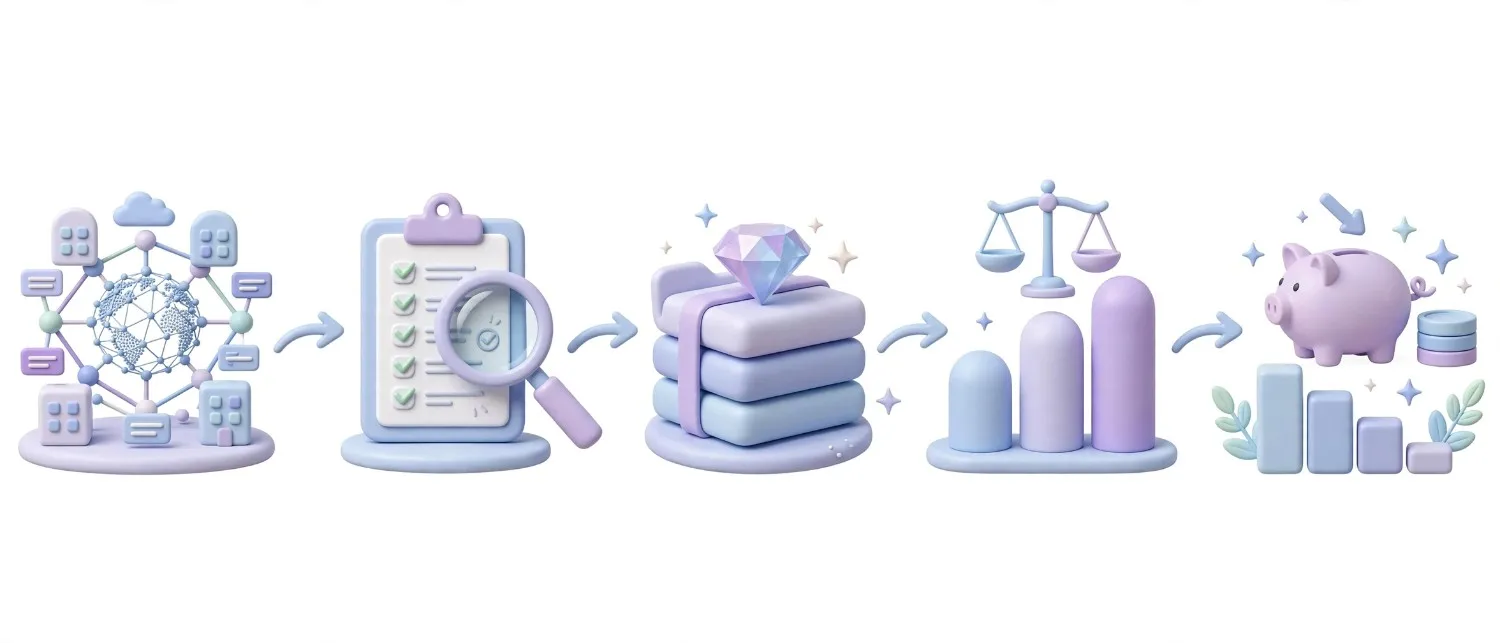
This is where most of the value actually sits. The aftermarket auction sites get the headlines because that’s where the flashy six-figure sales happen, but that’s also the least efficient place to shop.
Step 1: Define Your Naming Criteria Before You Search

Write down your non-negotiables first – extension, character limit, pronounceability – so you’re not swayed by a flashy but off-brand name mid-search.
Step 2: Search Curated Marketplaces Before Live Auctions

Curated marketplaces price names based on structured appraisal models rather than emotional bidding wars, which is typically where the biggest savings live. Aolra’s inexpensive premium domains for startup branding collection is built specifically around this gap – brandable, AI-relevant names priced well under aftermarket comparables.
Step 3: Check Aged and Expired Domain Pools

Domains that lapsed from unrelated businesses sometimes carry exactly the short, clean structure AI startups want, at a fraction of a freshly-registered premium listing.
Step 4: Use Data, Not Instinct, to Set Your Offer

Before you make an offer, run the name through an appraisal tool and compare it against actual recent sales, not asking prices – asking prices are frequently aspirational.
Step 5: Negotiate Through a Broker When the Seller Is Unresponsive

A broker adds a fee, but they also add leverage and often access to names that never make it to public listings.
Step 6: Close the Deal With an Escrow Service

Never wire funds directly to a private seller. Use a reputable escrow provider for any domain purchase above a few hundred dollars.
If you’re just getting oriented in this market for the first time, domain investing for beginners is a solid primer before you start making offers.
Comparison: Buying on the Open Aftermarket vs. a Curated Marketplace
| Factor | Open Aftermarket / Live Auction | Curated Marketplace (e.g. Aolra) |
|---|---|---|
| Pricing model | Emotional bidding, can spike unpredictably | Structured appraisal-based pricing |
| Time to close | Days to weeks, negotiation-heavy | Often same-day to a few days |
| Trademark vetting | Buyer’s responsibility, rarely pre-checked | Frequently pre-screened |
| Price transparency | Low – asking price often inflated | Higher – pricing reflects comparable sales |
| Best for | Ultra-rare one-word names | Brandable, budget-conscious startup names |
Expert Tips for Naming an AI Startup on a Budget

Tip 1: Prioritize .com over .ai if your budget forces a choice
.com still carries broader consumer trust outside tech-insider circles.
Tip 2: Test the name out loud before buying it
Say it in a fake investor pitch and a fake customer support call; if it stumbles in either, keep looking.
Tip 3: Buy the defensive variants later, not first
Secure your primary domain, then worry about buying up common misspellings once you have revenue to justify it.
Tip 4: Don’t let scarcity panic drive the price up
If a broker says “there’s another buyer interested,” treat it as a negotiating tactic, not a fact, unless you can verify it.
Tip 5: Revisit your domain strategy before, not after, you lock your business plan
Naming decisions made too early or too late both create costly rework, a mistake this piece on startup name and domain strategy unpacks well.
For founders who want the fundamentals first, what a premium domain name actually is, with real examples, is worth a five-minute read before you start negotiating anything.
Frequently Asked Questions About AI Company Domain Names

Q1: Why are AI company domain names so much more expensive than other tech domains?
Demand spiked faster than supply. A surge of AI startups launching simultaneously created intense competition for a limited pool of short, brandable .ai and .com names, pushing prices well above historical tech-sector norms.
Q2: Is .ai a good extension for a serious AI company, or should I hold out for .com?
.ai is widely accepted within investor and developer circles as a legitimate substitute for .com, though .com still edges it out for consumer-facing trust. The right choice depends on your audience.
Q3: How much should a founder realistically budget for a premium AI domain name?
It varies enormously by name quality, but curated marketplaces frequently offer strong, brandable AI-relevant names for a fraction of what comparable names fetch at live auction.
Q4: Are expired or aged domains safe to buy for an AI startup?
They can be, provided you check the domain’s prior use history and backlink profile to avoid inheriting spam penalties or trademark baggage from a previous owner.
Q5: What’s the fastest way to check if an AI domain name has trademark conflicts?
Run a search through your country’s trademark database and a general web search for the exact name plus “software” or “AI” before making an offer, ideally before you fall in love with the name.
Conclusion
AI company domain names are expensive right now for identifiable, rational reasons – not hype alone – and that means the market inefficiencies are also identifiable and exploitable if you know where to look. Founders who skip the live-auction bidding wars and shop curated, appraisal-backed inventory consistently walk away with stronger names for less money and less stress.

Ready to find your AI startup’s name without the aftermarket markup? Browse Aolra’s inexpensive premium domain collection now and lock in a brandable name before your competitors do.
Pingback: 7 Hidden Premium Domain Price Factors Buyers Miss