The best time to buy premium domain names is during end-of-quarter registrar sales, late Q4 budget cycles, and immediately after a domain drops from an expiring portfolio – when sellers are motivated and competition from other buyers is lowest. Timing your purchase around these windows, rather than buying reactively when inspiration strikes, can lower acquisition cost by 15-40% compared to peak-demand periods. Understanding these cyclical patterns turns domain buying from a guessing game into a repeatable, budget-friendly strategy.
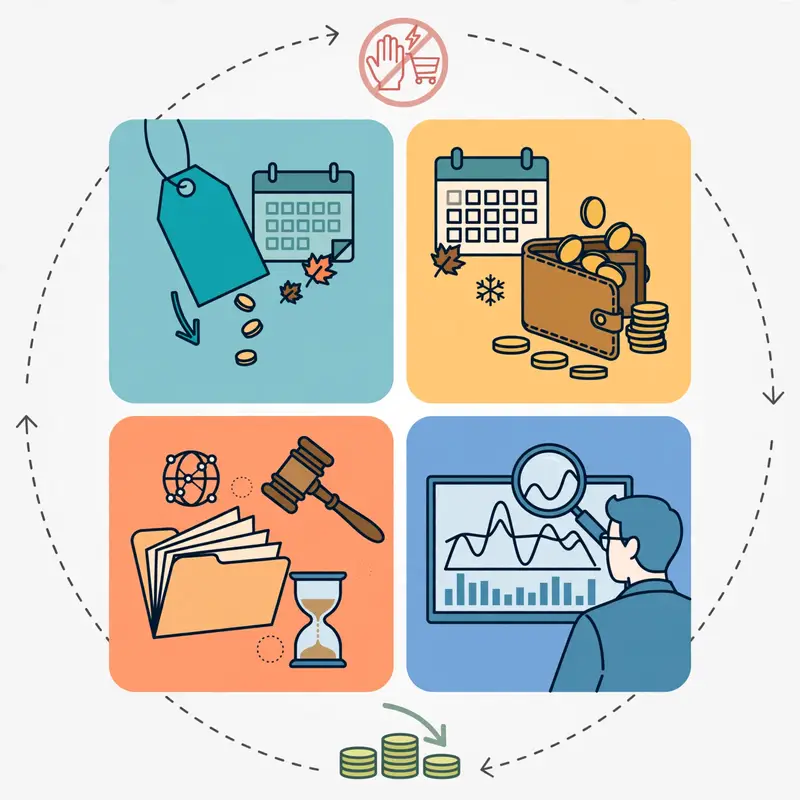

Most founders treat a domain purchase as an impulse decision: they find a name they love, check availability, and buy on the spot without ever asking whether that moment is actually a good one to negotiate from. However, professional domain investors rarely buy this way. Instead, they track pricing cycles, registrar promotions, and seller behavior the same way a stock trader watches market conditions before placing an order. If you’re weighing a premium domain name for your next brand, business, or portfolio addition, understanding when demand dips and sellers soften can make a meaningful difference to your final price.
This guide breaks down the seasonal, cyclical, and situational timing patterns that experienced buyers use to negotiate smarter deals – along with the mistakes that cost first-time buyers real money.
What Determines the Best Time to Buy a Premium Domain?
The timing of a domain purchase matters because pricing in the aftermarket isn’t fixed. Unlike a retail product with a sticker price, premium domains are valued through a mix of comparable sales, buyer urgency, and seller cash-flow needs, all of which shift throughout the year. Consequently, the same domain can sell for noticeably different amounts depending on when the offer lands.

Three forces primarily shape the best time to buy a premium domain:
- Seller motivation – portfolio holders renewing hundreds of names often want to shed low-performing assets before renewal invoices hit.
- Buyer competition – fewer active bidders during slow periods means less pressure to overbid.
- Market sentiment – broader startup funding cycles and tech sentiment influence how aggressively buyers chase premium names.
Because these factors move independently, the smartest approach combines calendar awareness with an understanding of the factors that influence premium domain pricing, so you know which levers actually matter for the name you’re targeting.
Quick Answer: The Three Best Windows to Buy
For a fast, scannable summary:
- Late Q4 (November-December) – registrars and portfolio sellers push year-end promotions, and many holders sell to offset renewal costs before the new billing cycle.
- Post-expiry drop windows – domains that lapse and re-enter the aftermarket often list below fair value before appraisal tools catch up.
- Slow-season months (July-August) – reduced buyer traffic in many Western markets softens negotiation leverage in the seller’s favor toward the buyer.
Seasonal and Calendar-Based Timing Patterns
Domain markets follow loose seasonal rhythms tied to business budgeting cycles, tax years, and registrar promotional calendars. While no pattern is guaranteed, tracking these trends consistently improves your negotiating position.
| Time Period | Typical Market Behavior | Buyer Advantage |
|---|---|---|
| January-February | New-year business launches spike demand | Low – high competition |
| March-April | Fiscal year-end selling (for April-close businesses) | Moderate – some motivated sellers |
| May-June | Steady mid-year activity | Neutral |
| July-August | Summer slowdown, fewer active buyers | High – lower competition |
| September-October | Renewed demand ahead of Q4 launches | Low to moderate |
| November-December | Portfolio pruning before renewal invoices | High – motivated sellers |
As the table shows, summer and late-year windows consistently favor buyers, while January and Q4-launch season tend to favor sellers because more businesses are actively shopping for names to match new product launches.
Why Q4 Works in a Buyer’s Favor
Domain portfolio holders, especially those managing hundreds or thousands of names, face a predictable cash outflow each year: renewal fees. As December approaches, holders review their portfolios and decide which names are worth renewing. Names that haven’t generated inquiries are frequently listed at a discount rather than renewed for another year of holding costs. This is precisely the moment buyers should be watching lists closely, since sellers are optimizing for a quick close over maximum price.
Why Summer Slows the Market
Registration and sales data collected by industry bodies consistently shows seasonal dips in Q3 activity across many domain categories, even in years where overall registration volume grows year-over-year. Decision-makers in Western markets take vacations and delay non-urgent purchases during mid-summer, which directly reduces the number of active bidders competing for the same names.
Market Cycle Timing: Beyond the Calendar
Calendar seasonality is only part of the picture. Broader market cycles, tied to startup funding, tech sentiment, and even record-breaking sales headlines, also swing pricing.
How Startup Funding Cycles Can Affect Domain Name Prices
When venture funding is abundant, more startups are actively naming and rebranding, which pushes up demand – and price – for short, brandable, and keyword-rich domains. Conversely, during funding slowdowns, fewer new companies are shopping for names, and existing portfolio holders become more willing to negotiate simply to generate cash flow. Buyers who track startup funding sentiment alongside domain listings often time their biggest acquisitions during funding pullbacks.
The “Headline Effect” on Pricing Expectations
Every time a domain sells for a record-breaking sum, seller expectations across the entire market tend to rise temporarily, even for names with no real connection to the headline sale. If you’ve read about record-breaking domain sales, you’ve likely noticed how sellers anchor their asking prices to these outlier events. Savvy buyers wait a few weeks after major sale announcements for that anchoring effect to fade before making offers, since sellers’ initial post-headline pricing is rarely grounded in comparable data.
Industry-Specific Timing Signals
Some sectors have their own micro-cycles worth watching:
- AI and tech-adjacent names often spike in demand around major product launches or funding announcements in that space, since buyers rushing to enter AI company naming trends tend to overpay during hype windows.
- Legal and professional-service names see steadier, less seasonal demand, though local SEO-focused names for law firm domain strategies can dip in price when a firm’s marketing budget cycle resets.
- E-commerce and retail-adjacent names see demand spikes ahead of Q4 shopping seasons and dips immediately after, as retailers who missed the window deprioritize rebranding until the following year.
- Finance and fintech names often move in tandem with broader capital-markets sentiment; when funding rounds slow across the fintech sector, sellers holding finance-adjacent domains tend to become more open to offers well below their original asking price.
- Healthcare and wellness names typically see the least seasonal volatility of any category, since demand for credible healthcare branding stays relatively constant year-round, meaning buyers should rely more heavily on renewal-cycle signals than on broad seasonal timing for this niche.
Recognizing which category your target domain falls into, and researching that category’s specific rhythm rather than applying a single blanket rule, is often the difference between a timing strategy that works and one that merely feels intuitive.
Regional and Time-Zone Timing Considerations
Domain sellers aren’t confined to one region, and this matters more than most buyers realize. A portfolio holder based in a different time zone may respond to offers on a different rhythm than you expect, and national holidays in the seller’s country can quietly extend negotiation timelines in your favor. For instance:
- Sellers based in markets with extended year-end holiday periods often go weeks without actively managing listings, which can mean slower responses but also less competing interest from other buyers during that window.
- Fiscal year differences matter too. Not every business closes its books in December; some operate on an April-to-March cycle, which shifts their internal “pruning” behavior to a different quarter than the calendar-year pattern most buyers assume.
- Currency fluctuations occasionally create windows where a domain priced in a foreign currency becomes comparatively cheaper for buyers transacting in a stronger currency, independent of the seller’s own pricing intentions.

None of these factors alone should dictate your timing strategy, but layering them on top of the seasonal and cyclical patterns already covered gives you a sharper, more complete picture of when a specific seller is actually likely to negotiate.
Reading Macroeconomic Signals Alongside Domain-Specific Ones
Broader economic conditions ripple into domain pricing in ways that are easy to overlook. When interest rates rise and capital becomes more expensive, businesses generally slow discretionary spending, and domain acquisition, being a largely discretionary branding expense, is often one of the first budget lines to get deferred. This typically translates into softer aftermarket pricing during tightening cycles and firmer, more competitive pricing during periods of economic expansion.
Buyers who pay attention to these macro signals, not just domain-specific calendars, often find that the single best time to buy a premium domain isn’t a fixed month at all. Instead, it’s a convergence point: a seasonal low-demand window that also happens to fall during a broader economic slowdown. When both conditions align, negotiating leverage shifts more decisively toward the buyer than either factor would produce on its own.
Best Time to Buy vs. Best Time to Sell: A Comparison
Understanding the seller’s perspective sharpens your own timing strategy, because every purchase is also someone else’s sale decision.
| Factor | Best Time to Buy | Best Time to Sell |
|---|---|---|
| Renewal cycle | Just before seller’s renewal date | Right after acquiring high buyer interest |
| Market sentiment | During funding slowdowns | During funding booms |
| Seasonal window | Summer and late Q4 | Q1 launch season |
| Competitive pressure | Low-bidder periods | High-bidder periods |
| Portfolio behavior | When sellers are pruning inventory | When demand for the category peaks |
This table illustrates a simple truth: the conditions that make a domain cheap for you are the same conditions a seller would consider unfavorable. Recognizing this tension helps you negotiate with realistic expectations instead of assuming every seller will happily accept a lowball offer regardless of timing.
Step-by-Step: How to Time Your Premium Domain Purchase

Rather than relying on instinct alone, follow a structured process to identify and act on favorable timing windows.
- Shortlist your target names early. Build a list of 5-10 acceptable domains months before you actually need one, since urgency is the single biggest driver of overpaying.
- Set price alerts or check listings weekly. Many marketplaces show price history; watch for reductions that signal seller motivation.
- Track renewal and expiry dates where visible. WHOIS lookups can reveal how close a domain is to its renewal date, giving you a rough sense of seller decision timing.
- Monitor category-specific news cycles. Avoid buying immediately after major sales headlines in your niche; wait for anchoring effects to settle.
- Review comparable pricing before offering. Cross-check your target against how appraisal tools calculate premium domain value so your offer reflects data rather than emotion.
- Time your outreach to slow periods. Send initial offers during July-August or November-December when sellers are more receptive to negotiation.
- Negotiate with a walk-away price in mind. Decide your maximum before starting talks, so seasonal leverage doesn’t get erased by in-the-moment excitement.
- Finalize and transfer promptly. Once terms are agreed, complete the transaction quickly using a step-by-step domain transfer process to avoid delays that can reopen negotiations.
Following this sequence turns domain buying into a repeatable system rather than a one-off scramble, which is exactly how portfolio-scale buyers operate.
Common Mistakes When Timing a Domain Purchase

Even experienced founders fall into predictable traps that erase the savings good timing could otherwise deliver.
- Buying under deadline pressure. Waiting until a product launch is weeks away forces rushed decisions and removes all negotiating leverage.
- Chasing headline-driven price anchors. Offering close to a recently publicized record sale price, even for an unrelated name, wastes budget on inflated expectations.
- Ignoring renewal-date signals. Buyers who skip WHOIS research miss clear windows when sellers are more motivated to close quickly.
- Overlooking category-specific slow seasons. A name relevant to retail behaves differently than one relevant to legal services; applying one timing rule to every niche leads to missed windows.
- Failing to plan for post-purchase regret. Many of the timing mistakes above compound into the kind of buyer’s remorse that comes from rushed, emotionally driven purchases rather than research-backed offers.
- Assuming every seller is equally motivated. Not all listings represent a seller in a hurry; some holders are simply testing market appetite and won’t move on price regardless of timing, so it’s worth gauging responsiveness before assuming a discount is on the table.
- Negotiating publicly on forums or social channels. Discussing your interest in a specific name publicly before securing it can tip off other buyers and accelerate demand, effectively erasing whatever timing advantage you were counting on.
- Underestimating transfer and escrow timelines. Even a perfectly timed offer can lose its advantage if the closing process drags on long enough for the seller’s circumstances, or the broader market, to shift again.
Avoiding these missteps requires patience – the same patience that separates casual buyers from disciplined ones. Each mistake above shares a common root: treating a domain purchase as a single moment in time rather than a process that unfolds over weeks or months.
Expert Tips for Timing Domain Acquisitions

Beyond the core timing windows, a few additional habits consistently help buyers close better deals.
- Build relationships with portfolio holders. Frequent buyers often get first access to price reductions before listings go public.
- Diversify your shortlist. Having multiple acceptable options removes the emotional urgency that erodes negotiating power.
- Track your own budget cycle too. If your business operates on a calendar fiscal year, plan domain purchases for a quarter when spending approval is easiest to secure internally.
- Reassess appraisals quarterly. Domain values shift with category trends, so a name that looked expensive six months ago may now be reasonably priced.
- Start with cost-efficient categories if you’re new. First-time buyers often benefit from reviewing how to find inexpensive premium domains for startup branding before attempting to time a purchase in a highly competitive niche.
- Keep a running watchlist with timestamped price checks. A simple spreadsheet noting the asking price of your top candidates every few weeks reveals patterns invisible in a single snapshot, including which sellers are gradually softening and which are holding firm.
- Separate “must-have” names from “nice-to-have” names. Reserve your most patient, timing-sensitive negotiating strategy for names you can genuinely walk away from; for names your brand truly depends on, factor in a smaller timing premium rather than risk losing the name entirely over a modest discount.
- Use email over instant messaging for offers. Written, asynchronous communication gives sellers room to consider your offer without the pressure of an immediate reply, which tends to produce more thoughtful, timing-aware counteroffers than real-time chat negotiations.
- Revisit passed-on names periodically. A domain that felt overpriced six months ago may reappear at a more reasonable price after a seasonal shift in seller motivation, so don’t remove a name from consideration permanently just because the timing wasn’t right on your first pass.
Practical Insights: How Timing Plays Out in Real Scenarios

Consider two founders shopping for a similar category of name.
Founder A needs a domain within two weeks for an imminent launch. With no timing flexibility, they approach the seller directly, reveal urgency in their messaging, and accept the first counteroffer to avoid delays. Because sellers can sense urgency in a buyer’s tone and follow-up cadence, this founder pays close to full asking price.
Founder B starts shopping four months before launch, tracks three comparable names, and waits for a late-Q4 window when one seller is actively pruning a renewal-heavy portfolio. Founder B negotiates from a position of choice rather than necessity, ultimately closing at a meaningfully lower price for a comparably strong name.
The difference isn’t luck; it’s planning. Buyers who build in lead time consistently outperform buyers who treat domain acquisition as a same-day decision, regardless of budget size. Whether you’re new to acquisitions or actively building a portfolio, the underlying principles from beginner-friendly domain investing strategies apply directly here: patience and research consistently outperform speed.
Founder C manages a small portfolio of niche websites and treats domain acquisition as an ongoing activity rather than a one-time event. Rather than shopping only when a specific need arises, Founder C maintains a standing watchlist of 15-20 names across categories they might expand into, checking pricing monthly. When a name on that list drops in price during a slow season, Founder C is ready to act within days, without needing to rush research or appraisal checks. This “always-watching” approach captures timing windows that reactive buyers miss entirely, simply because Founder C isn’t starting the research process from zero when an opportunity appears.
Tools and Resources for Tracking Domain Timing

Executing a timing-based buying strategy is far easier with the right supporting tools in place. Consider building a lightweight system around the following:
- WHOIS lookup tools to check registration and expiration dates, giving you a rough sense of when a seller’s renewal decision is approaching.
- Domain appraisal platforms to establish a data-backed price baseline before you negotiate, rather than relying on a seller’s asking price as your only reference point.
- Sales history databases to track comparable transactions in your target category, helping you recognize when current asking prices are inflated relative to recent, similar sales.
- A simple spreadsheet or CRM-style tracker logging each target domain’s price history, seller responsiveness, and your own notes from prior outreach attempts.
- Calendar reminders tied to seasonal windows so you proactively revisit your watchlist during the buyer-favorable periods outlined earlier in this guide, rather than relying on memory alone.
None of these tools replace judgment, but together they turn domain timing from a vague intuition into a structured, evidence-based process you can repeat every time you’re in the market for a new name.
Frequently Asked Questions
What is the best time to buy a premium domain?
The best time to buy a premium domain is typically during late Q4, when portfolio holders prune inventory before renewal invoices, or during summer slow seasons when buyer competition drops.
Does buying a domain at the “wrong” time really cost more money?
Yes. Buyer competition and seller urgency both shift throughout the year, and offers made during high-demand periods routinely close 15-40% higher than the same name would fetch during a slower window.
Should I wait for a domain to expire before buying it?
Not necessarily. Waiting for expiry carries risk, since other buyers may also be watching, but domains that recently dropped and re-entered the aftermarket sometimes list below fair market value before pricing catches up.
How far in advance should I start shopping for a premium domain?
Aim for at least three to four months of lead time. This allows you to track pricing patterns, build a shortlist, and negotiate without deadline pressure forcing you into a worse deal.
Do seasonal timing patterns apply to every domain category?
Largely, yes, though the intensity varies. E-commerce and retail-adjacent names see sharper Q4 swings, while professional-service names tend to move more steadily throughout the year.
Is it better to negotiate directly with a seller or through a marketplace?
Both can work, but direct relationships with portfolio holders often reveal price flexibility before it appears in public listings, giving relationship-based buyers a timing edge.
Conclusion
Timing is one of the few negotiating advantages a domain buyer can fully control. While you can’t change how much a seller originally paid or how the broader market feels about a category, you can control when you show up to negotiate – and that single decision consistently separates buyers who overpay from buyers who close smart deals. By tracking seasonal patterns, watching renewal cycles, and avoiding headline-driven urgency, you position yourself to negotiate from strength rather than pressure.

If you’re ready to put these timing principles into practice, explore Aolra’s current inventory of cheap, low-cost premium domains and start building your shortlist today, well before you actually need to buy.